What Is a Sonic Toothbrush? How Sonic Vibration Works and Its Benefits Explained
Published on 2026-06-11 · The Brusheva dental team
What exactly is a sonic toothbrush?
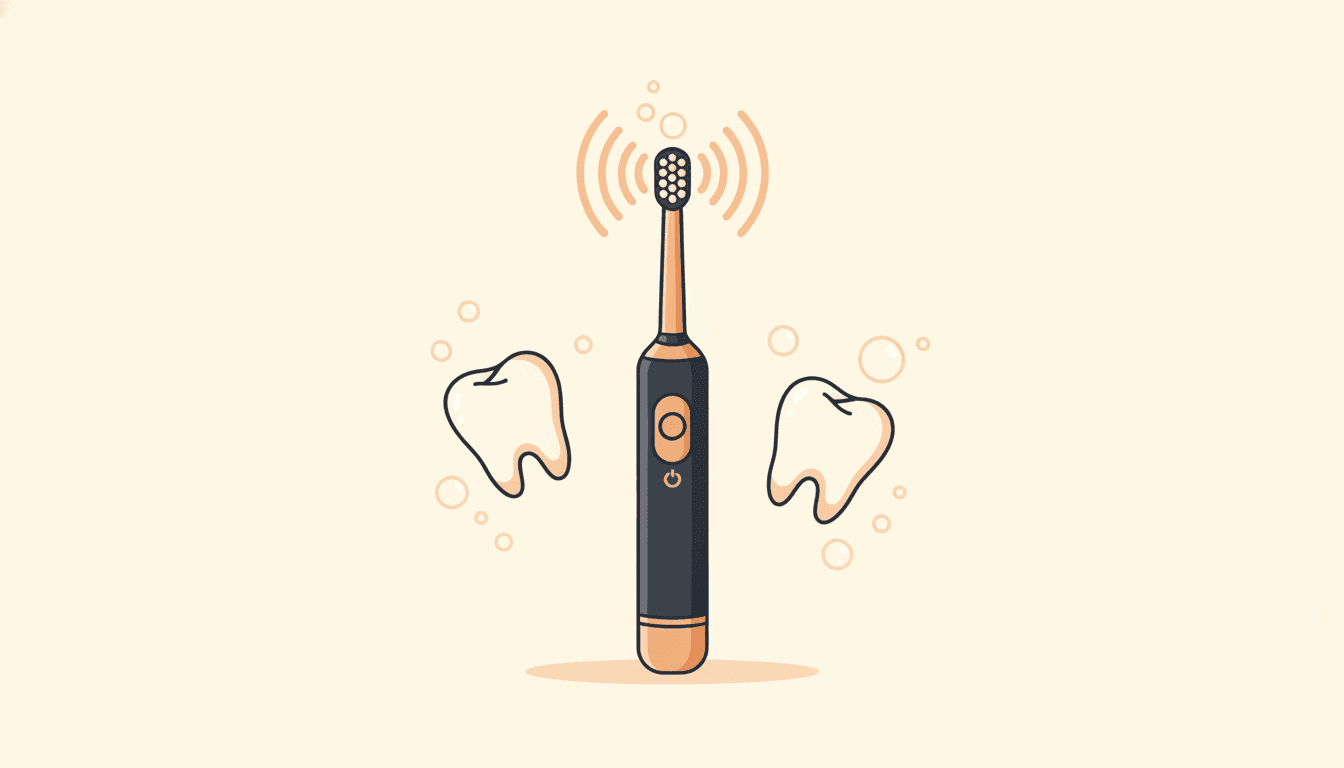
A sonic toothbrush is an electric toothbrush that cleans your teeth using high-frequency vibration. The biggest difference from a traditional manual brush is that you don't have to scrub hard by hand — instead, a motor drives the bristles in extremely fast micro-vibrations that sweep away plaque and food debris for you. Take the Brusheva Sonic Electric Toothbrush as an example: the head delivers approximately 30,000–32,000 sonic vibrations per minute, a rate so fast it's hard for the naked eye to make out.
The word "sonic" refers to the fact that the head's vibration frequency falls within the range the human ear can perceive — it doesn't mean the brush uses sound to clean your teeth. What matters is still the real contact between the bristles and the tooth surface, plus the cleaning effect that high-frequency vibration brings.
How does sonic vibration clean your teeth?
Sonic vibration cleans your teeth through two actions: the bristles directly sweep grime off the tooth surface, and the high-frequency vibration drives the fine foam formed by saliva and toothpaste into a flowing motion, carrying away debris from hard-to-reach spots between teeth and along the gumline.
When the head vibrates at roughly 30,000–32,000 times per minute, the bristle tips generate plenty of fine fluid streams. These flowing liquids can seep into the gaps between teeth, the gum sulcus and other blind spots, providing assisted cleaning that bristles alone can't reach. So even if you don't brush with much force, sonic vibration can still help you achieve fairly comprehensive cleaning. To compare the different technologies in more depth, take a look at our sonic technology vs rotating brushes article.
What are the benefits of a sonic toothbrush for beginners?
For anyone using a sonic toothbrush for the first time, the biggest benefit is that you can "clean thoroughly without pressing hard" — and it also makes it easier to build correct brushing habits.
- Effortless cleaning: the high-frequency vibration does the work for you, so all you need to do is slowly move the head along the tooth surface and gumline.
- Built-in 2-minute smart timer: a pulse every 30 seconds reminds you to move to the next zone, making sure every area of your mouth gets enough brushing time.
- 5 cleaning modes: clean, white, massage, sensitive and care, including a "Gingiva" gum-care mode for those with more easily sensitive gums.
- Fully waterproof (IPX7): use it confidently in the shower, and it's easy to rinse clean.
- Long battery life: a single charge lasts up to 12 weeks (about 2–3 months), so you don't need to charge it daily — and it's handy for travel too.
This Brusheva Sonic Electric Toothbrush is designed by an international dental team, and 98% of surveyed Hong Kong dental professionals recommend Brusheva (2023 Hong Kong Healthcare Market Research Limited survey).
How should beginners choose a brush head and mode to start?
Beginners are advised to start with the gentlest, most versatile setting, then adjust gradually to suit their needs. Brusheva offers 4 dedicated brush heads: whitening, tongue-care, all-round and ultra-soft.
If your gums are easily sensitive or it's your first time using a sonic toothbrush, you can choose the ultra-soft head paired with the sensitive mode, giving your mouth time to get used to the feel of high-frequency vibration. To balance everyday cleaning with surface brightening, the all-round and whitening heads are both safe bets. Remember to replace your brush head every 3 months to maintain bristle resilience and cleaning performance. If you want to know whether electric toothbrushes really help overall, check out our article on whether electric toothbrushes really work.
Is a sonic toothbrush suitable for everyone?
Broadly speaking, a sonic toothbrush is a daily cleaning tool suited to most people — from busy office workers who'd rather skip the hassle, to users chasing a deep-clean feel, to people wearing braces, everyone can benefit. The key is pairing it with the right brushing technique and a suitable head.
When you first use it, start with a gentler mode for a few days to adjust. While brushing, rest the head lightly against the tooth surface and move slowly — there's no need to scrub back and forth hard the way you would with a manual brush. Combine that with the 2-minute timer, brushing zone by zone, and you'll build a steady, effective cleaning routine.
Quick questions
- Does a sonic toothbrush clean teeth using sound?
- No — a sonic toothbrush cleans mainly through bristle contact and high-frequency vibration, not by using sound to brush."Sonic" only refers to the vibration frequency falling within the range the human ear can perceive; what matters is the real cleaning between bristles and tooth surface.
- How does sonic vibration help clean between teeth?
- The high-frequency vibration drives fine fluid streams formed by saliva and toothpaste, helping carry away debris from hard-to-brush spots between teeth and in the gum sulcus.Brusheva delivers roughly 30,000–32,000 vibrations per minute, generating fine flowing liquid at the bristle tips for assisted cleaning.
- Which brush head should a beginner pick for their first use?
- We suggest starting with the ultra-soft head paired with the sensitive mode, letting your mouth gradually adjust to high-frequency vibration.Brusheva has 4 heads in total — whitening, tongue-care, all-round and ultra-soft — and we recommend replacing them every 3 months.
Related articles
Do Sonic Electric Toothbrushes Have Downsides? 5 Common Worries Unpacked (Gum Damage? Enamel?)
Many Hong Kong buyers want to switch to a sonic electric toothbrush but worry the vibration will harm their gums or wear away enamel. This article unpacks the 5 most common concerns one by one, and shows you how to use it correctly and pick the right brush head for a worry-free switch.
Read more →
Sonic vs Rotating Electric Toothbrush: A Hong Kong Buyer's Guide
What's the difference between a sonic and a rotating electric toothbrush? This Hong Kong buyer's guide breaks down how each cleans, who they suit and their upkeep cost, so you can pick the right electric toothbrush for you.
Read more →
Do Sonic Toothbrushes Have Downsides? Common Worries & Correct Use Explained
Worried a sonic electric toothbrush could harm your gums? This article works through the common concerns about the so-called downsides of sonic toothbrushes — gum sensitivity, pressure and the adjustment period — and shows you the correct way to use one, so you can decide with confidence.
Read more →