Sonic vs Rotating Electric Toothbrush: A Hong Kong Buyer's Guide
Published on 2026-06-14 · The Brusheva dental team
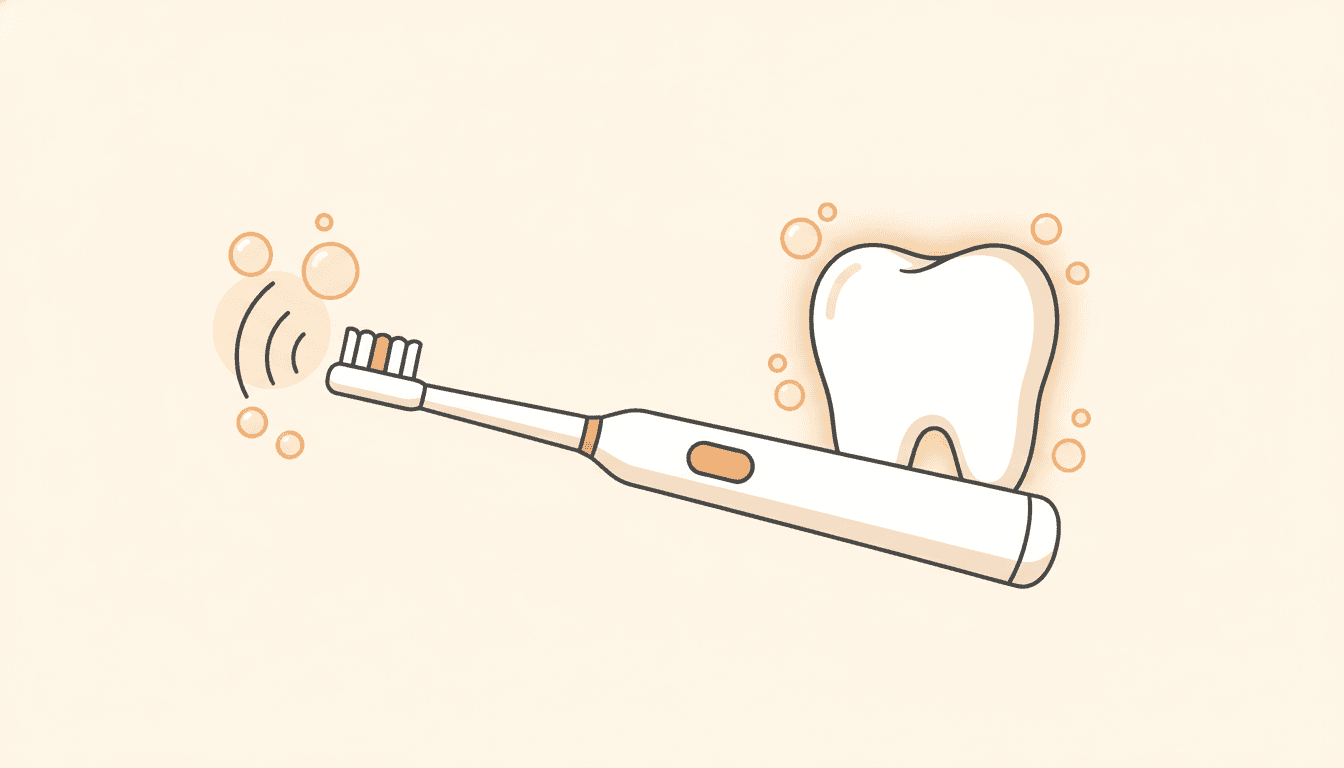
What's the difference between a sonic and a rotating electric toothbrush?
The biggest difference is how they clean: a sonic electric toothbrush uses high-speed brush-head vibration to create fluid movement, while a rotating model uses a small round head that spins to "scrub" each tooth. Both are more efficient than a manual brush, but the handling, coverage and ideal users differ.
A sonic toothbrush (such as the Brusheva Sonic Electric Toothbrush) delivers approx. 30,000–32,000 sonic vibrations per minute. Its wider head simply sweeps along the tooth surface and gum line, and the fine fluid motion it generates helps lift plaque from between teeth and along the gum line. A rotating brush uses a small circular head that you move slowly tooth by tooth, so it relies more on you pausing and positioning at each tooth. To understand sonic technology in depth, read our guide on how sonic vibration works.
How should Hong Kong buyers choose? What should you look at?
Choosing an electric toothbrush mainly comes down to four things: how the cleaning feels, gum sensitivity, the features you need and long-term upkeep cost. Work out which type of user you are first, then match the features — it makes the decision easier.
Sensitive gums or beginners: a sonic brush has a gentler sweep, so you don't need to press hard, and it's even more comfortable with the sensitive mode and the ultra-soft head. Prefer the "scrub each tooth clean" feel: a rotating head is small, and some people feel they reach each tooth more directly. Wear braces or have wide gaps: sonic fluid motion lifts debris from hard-to-reach spots more easily. Brusheva offers 5 cleaning modes (including the "Gingiva" gum-care mode) and 4 dedicated brush heads, so you can switch between whitening, tongue-care, all-round and ultra-soft needs.
What are the real benefits of a sonic electric toothbrush?
For most Hong Kong users, a sonic brush wins on a low learning curve, quick coverage and long-lasting battery. You just hold it against the tooth surface and move slowly — no need to deliberately rotate at each tooth.
The Brusheva Sonic Electric Toothbrush has a 2-minute smart timer that pulses every 30 seconds to prompt you to move to the next zone, so every area gets enough brushing time. It's fully waterproof (IPX7), so you can use it in the bathroom with peace of mind, and the battery lasts up to 12 weeks per charge — no daily charging, and handy for business trips and travel. The product is designed by an international dental team, and 98% of surveyed Hong Kong dental professionals recommend Brusheva (2023 Hong Kong Healthcare Market Research Limited survey). For full specs, visit the Brusheva Sonic Electric Toothbrush product page.
How do you work out long-term upkeep and cost?
Whether sonic or rotating, brush heads are consumables — replace them every 3 months and stop using them once they're worn. When you calculate cost, factor in the ongoing spend on brush heads too.
Brusheva's 4 dedicated brush heads (whitening, tongue-care, all-round, ultra-soft) each come in a 3-pack for HK$149, with each head lasting about 3 months — spread across the year, that's a reasonable cost. Add in a battery that lasts up to 12 weeks per charge, and you save on both charging and replacement frequency. To learn how to pick between the different heads, see our guide to choosing among the four replacement heads. The Brusheva handle comes with a one-year limited warranty, with free Hong Kong shipping in 2–4 business days.
Quick questions
- Is a sonic brush always better than a rotating one?
- Not necessarily — it depends on your gum sensitivity, cleaning habits and the features you need.Sonic offers a gentler sweep and quicker coverage, while rotating wins on the tooth-by-tooth positioning feel; pick by personal preference.
- Is a sonic brush suitable for people with sensitive gums?
- Yes, because the sonic sweep is gentle, and it's even more comfortable with the sensitive mode and ultra-soft head.Brusheva has 5 cleaning modes, including the Gingiva mode for gum care.
- Is long-term upkeep of an electric toothbrush expensive?
- The main cost is brush heads, which should be replaced every 3 months.Brusheva heads are HK$149 for a 3-pack, and with a battery lasting up to 12 weeks, the overall spend is reasonable.
Related articles
Do Sonic Electric Toothbrushes Have Downsides? 5 Common Worries Unpacked (Gum Damage? Enamel?)
Many Hong Kong buyers want to switch to a sonic electric toothbrush but worry the vibration will harm their gums or wear away enamel. This article unpacks the 5 most common concerns one by one, and shows you how to use it correctly and pick the right brush head for a worry-free switch.
Read more →
Do Sonic Toothbrushes Have Downsides? Common Worries & Correct Use Explained
Worried a sonic electric toothbrush could harm your gums? This article works through the common concerns about the so-called downsides of sonic toothbrushes — gum sensitivity, pressure and the adjustment period — and shows you the correct way to use one, so you can decide with confidence.
Read more →
What Is a Sonic Toothbrush? How Sonic Vibration Works and Its Benefits Explained
A sonic toothbrush cleans your teeth with high-frequency vibration, producing roughly 30,000–32,000 sonic vibrations per minute to create fine fluid streams that reach between teeth. This guide breaks down how sonic vibration works, its real benefits, and how to pick the right head and mode if you're new to it.
Read more →